
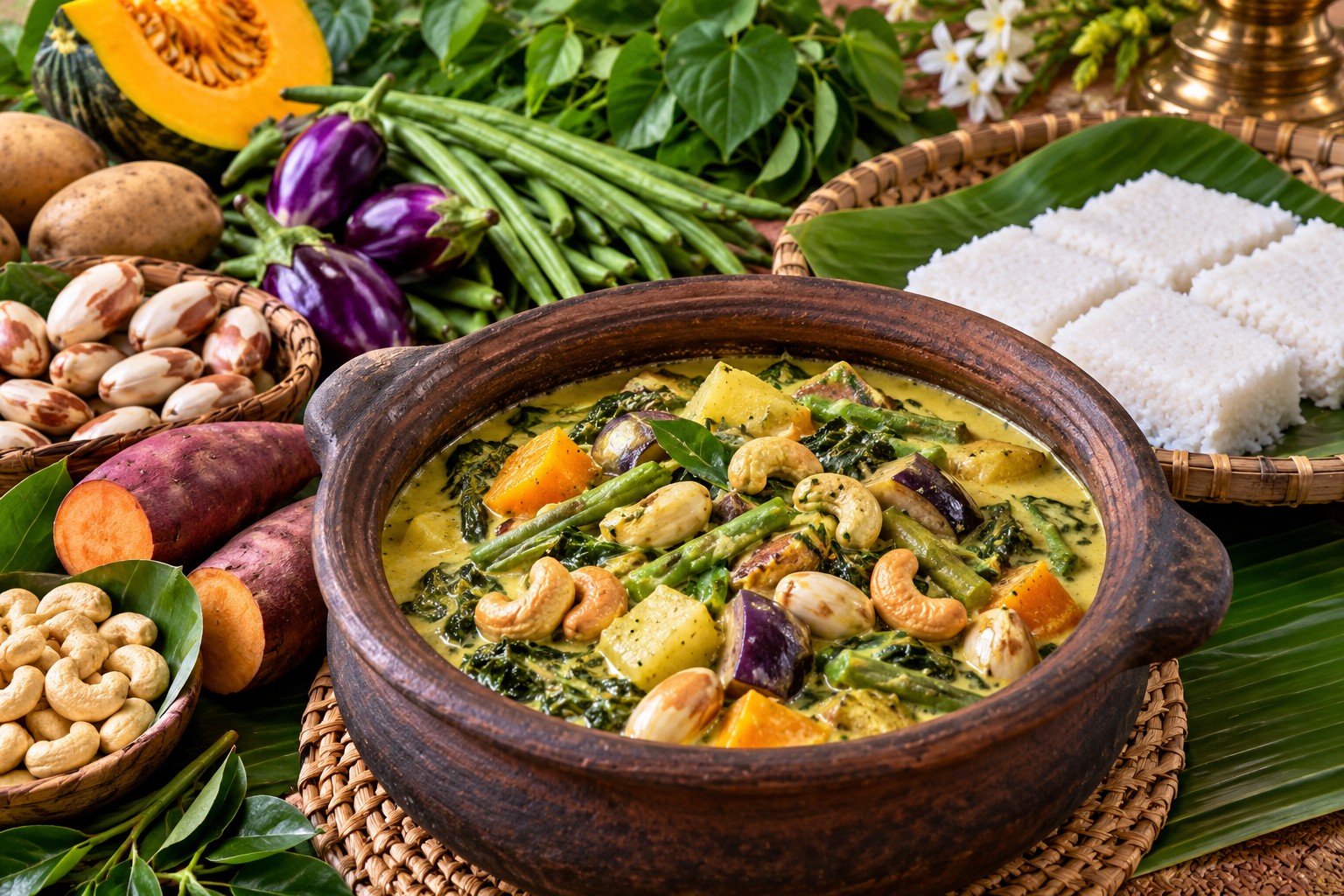
🍲 හත් මාළුව – රස හතකින් බැඳුණු අපේ ආහාර උරුමය
ශ්රී ලාංකික අලුත් අවුරුදු කෑම මේසයේ සුවිශේෂී සාම්ප්රදායික ව්යාංජනයක්
අලුත් අවුරුදු උදාවත් සමඟ ගෙදර මුළුතැන්ගෙයින් නැඟෙන කිරිබත් සුවඳ, කැවිලිවල රසය සහ මැටි වළඳක සෙමින් පිසෙන හත් මාළුව අපේ පැරණි ගැමි ජීවිතයේ සුන්දර මතකයන් අවදි කරයි.
හත් මාළුව යනු ශ්රී ලාංකික ආහාර සංස්කෘතියේ සුවිශේෂී ස්ථානයක් හිමි සාම්ප්රදායික ව්යාංජනයකි. විශේෂයෙන් සිංහල හා දෙමළ අලුත් අවුරුදු සමයේ ඇතැම් ප්රදේශවල පිළියෙළ කරන මෙම ආහාරය, අපේ පාරම්පරික දැනුමත්, දේශීය ආහාර සම්පතත් එකට එක්කරන අපූරු නිර්මාණයකි.
🌿 හත් මාළුව යනු කුමක්ද?
හත් මාළුව යන නමෙන්ම පැහැදිලි වන පරිදි, මෙය සාමාන්යයෙන් ශාකමය ආහාර ද්රව්ය වර්ග හතක් එකට එක්කර පිසින ව්යාංජනයකි.
එහෙත් ශ්රී ලංකාවේ සෑම ප්රදේශයකම එකම ද්රව්ය හත භාවිත කරන්නේ නැත.
ප්රදේශයෙන් ප්රදේශයටත්, පවුලෙන් පවුලටත් හත් මාළුව සකස් කරන ආකාරය වෙනස් වේ.
සබරගමුව, උඩරට සහ ඌව වැනි ප්රදේශවල හත් මාළුව පිළියෙළ කිරීමේ විශේෂිත සම්ප්රදායන් දැකිය හැකිය.
🥥 හත් මාළුවට එක්වන දේශීය ආහාර වර්ග
සාම්ප්රදායික හත් මාළුවක් සකස් කිරීමට යොදාගත හැකි ආහාර ද්රව්ය අතර,
කජු
කොස් ඇට
වම්බටු
වට්ටක්කා දලු
මෑ කරල්
බතල
අල
වැනි ද්රව්ය ප්රධාන තැනක් ගනී.
ඇතැම් ප්රදේශවල මේවා වෙනුවට වෙනත් දේශීය අල වර්ග, පලා වර්ග සහ එළවළු යොදාගනී.
මෙම ද්රව්ය පොල් කිරි, තුනපහ, කහ, කරපිංචා, රම්පේ සහ අනෙකුත් කුළුබඩු සමඟ සෙමින් පිසීමෙන් හත් මාළුවට ආවේණික රසය සහ සුවඳ ලැබේ.
🌸 අලුත් අවුරුද්ද සහ හත් මාළුව
හත් මාළුව විශේෂයෙන් අලුත් අවුරුදු ආහාර සම්ප්රදාය සමඟ බැඳී පවතී.
කිරිබත් සමඟ හත් මාළුව පිළිගැන්වීම ඇතැම් ප්රදේශවල පරම්පරා ගණනාවක සිට පැවත එන සිරිතකි.
අතීතයේ ගෙවත්තෙන් හෝ අවට පරිසරයෙන් ලබාගත හැකි ආහාර ද්රව්ය යොදාගෙන හත් මාළුව සකස් කිරීම, දේශීය ආහාර සම්පත ප්රයෝජනයට ගත් ගැමි ජීවන රටාව පිළිබිඹු කරයි.
මෙහි ඇති තවත් විශේෂත්වයක් වන්නේ විවිධ රසයන් සහිත ආහාර ද්රව්ය එකම වළඳක පිසීමයි.
🍃 හත් මාළුවේ පෝෂණීය වටිනාකම
හත් මාළුවේ පෝෂණීය වටිනාකම භාවිත කරන ද්රව්ය අනුව වෙනස් වේ.
කජු වැනි ඇට වර්ගවලින් මේදය සහ ප්රෝටීන් ලැබෙන අතර, එළවළු සහ පලා වර්ගවලින් ආහාරමය තන්තු, විටමින් සහ ඛනිජ ලවණ ලබාගත හැකිය.
කොස් ඇට, අල සහ අනෙකුත් දේශීය ආහාර ද්රව්ය මඟින් ශරීරයට ශක්තිය ලබාදෙන පෝෂක ද ලැබේ.
එහෙත් පොල් කිරි සහ කජු ප්රමාණය අනුව එහි මේදය සහ කැලරි ප්රමාණය ද වෙනස් විය හැකිය.
එබැවින් හත් මාළුවේ වැදගත්කම එහි විවිධත්වය සහ සමබර ආහාර වේලකට එක්කළ හැකි පෝෂණීය දායකත්වය තුළ පවතී.
🍲 නිවසේදී හත් මාළුවක් සකස් කරමු
අවශ්ය ප්රධාන ද්රව්ය:
කජු – ග්රෑම් 100
කොස් ඇට – 8ක් පමණ
වම්බටු – කුඩා ගෙඩි 2ක්
වට්ටක්කා දලු – 5ක් පමණ
මෑ කරල් – 4ක්
බතල – කුඩා අලයක්
අල – කුඩා අල 2ක්
රසකාරක සහ අනෙකුත් ද්රව්ය:
පොල් කිරි – අවශ්ය පමණ
රතුලූනු – ගෙඩි කිහිපයක්
සුදුලූනු – බික් 3ක්
අමුමිරිස් – කරල් 2ක්
කහ කුඩු – තේ හැඳි ½
තුනපහ කුඩු – තේ හැඳි 1
මිරිස් කුඩු – රස අනුව
කරපිංචා සහ රම්පේ
ලුණු – අවශ්ය පමණ
සාදන ආකාරය:
කජු කලින් පොඟවා ගන්න. කොස් ඇට පිරිසිදු කර කැබලිවලට කපාගන්න.
අල, බතල සහ අනෙකුත් එළවළු සෝදා කුඩා කැබලිවලට කපාගන්න.
මැටි වළඳකට කජු, කොස් ඇට, අල සහ බතල දමා දිය පොල් කිරි ස්වල්පයක් එක්කර පිසගන්න.
ඒවා තරමක් මෘදු වූ පසු වම්බටු, මෑ කරල්, ලූනු, සුදුලූනු, අමුමිරිස් සහ කුළුබඩු එක්කරන්න.
සියලු ද්රව්ය හොඳින් පිසුණු පසු වට්ටක්කා දලු සහ මිටි පොල් කිරි එක්කර මඳ ගින්නේ තවත් ස්වල්ප වේලාවක් පිසගන්න.
රස පරීක්ෂා කර අවශ්ය පරිදි ලුණු එක්කර ලිපෙන් බාගන්න.
උණුසුම් කිරිබත් සමඟ පිළිගැන්වූ විට හත් මාළුවේ රසය තවත් විශේෂ වේ.
🌾 අපේ පරම්පරාවෙන් අනාගතයට
අද නූතන ජීවිතයේ පහසුව සඳහා විවිධ ආහාර තෝරාගත්ත ද, අපේ දේශීය ආහාර උරුමය අමතක නොකළ යුතුය.
හත් මාළුව වැනි ආහාර පිළියෙළ කරන ආකාරය දරුවන්ට හඳුන්වාදීමෙන්, ඔවුන්ට අපේ සංස්කෘතිය, ගැමි ජීවිතය සහ දේශීය ආහාර සම්පත පිළිබඳ අවබෝධයක් ලබාදිය හැකිය.
විශේෂයෙන් විදේශ රටවල ජීවත් වන ශ්රී ලාංකික පවුල්වලට මෙවැනි ආහාර සම්ප්රදායන් රැකගැනීම තම මව්බිම සමඟ ඇති බැඳීම ශක්තිමත් කරගැනීමට සුන්දර අවස්ථාවකි.
හත් මාළුව යනු එකම වළඳක පිසුණු ආහාර ද්රව්ය හතක් පමණක් නොවේ. එය අපේ දේශීය දැනුම, පවුලේ එකමුතුකම, ගැමි සම්ප්රදාය සහ ශ්රී ලාංකික ආහාර සංස්කෘතියේ අනන්යතාවය පිළිබිඹු කරන වටිනා උරුමයකි.
🌿 English Version
Hath Maluwa – Seven Ingredients, One Sri Lankan Culinary Tradition
A Traditional Curry from Sri Lanka's Festive Food Heritage
The aroma of freshly prepared milk rice, traditional sweets, and a gently simmering clay pot of Hath Maluwa brings back memories of Sri Lankan New Year celebrations.
Hath Maluwa is a traditional Sri Lankan curry prepared by combining seven plant-based ingredients with coconut milk and aromatic spices.
It is especially associated with the Sinhala and Tamil New Year season and has a special place in the culinary traditions of several regions of Sri Lanka.
🌿 What Makes Hath Maluwa Special?
The name Hath Maluwa refers to a curry made with seven ingredients.
However, there is no single recipe followed throughout Sri Lanka.
Families in Sabaragamuwa, the central highlands, Uva, and other regions have developed their own variations, depending on locally available vegetables, leaves, nuts, and seeds.
This diversity makes Hath Maluwa an interesting example of Sri Lanka's regional food heritage.
🥥 Traditional Ingredients
A typical version may contain:
Cashew nuts
Jackfruit seeds
Eggplant
Pumpkin leaves
Long beans
Sweet potatoes
Potatoes
Other regional recipes may include different vegetables, leafy greens, or local tubers.
These ingredients are traditionally cooked with coconut milk, turmeric, curry powder, onions, garlic, curry leaves, pandan leaves, and other spices.
🌸 A Special Place at the New Year Table
Hath Maluwa is particularly associated with traditional Sri Lankan New Year meals.
In some communities, it is served alongside Kiribath, the well-known Sri Lankan milk rice.
The dish reflects a food culture that makes use of ingredients grown in home gardens and local agricultural surroundings.
Preparing several different ingredients in one pot also demonstrates the resourcefulness of traditional Sri Lankan cooking.
🍃 Nutritional Value
Hath Maluwa provides a combination of nutrients from vegetables, nuts, seeds, and coconut milk.
Cashews contribute fats and protein, while vegetables and leafy greens can provide dietary fiber, vitamins, and minerals.
Jackfruit seeds and tubers provide carbohydrates and other nutrients.
The nutritional composition varies depending on the recipe and the quantity of coconut milk and nuts used.
Its value lies in the diversity of ingredients and its contribution to a varied diet.
🍲 Preparing Hath Maluwa at Home
Seven main ingredients:
100 g cashew nuts
About 8 jackfruit seeds
2 small eggplants
About 5 pumpkin leaves
4 long beans
1 small sweet potato
2 small potatoes
Additional ingredients:
Coconut milk as needed
Red onions
3 garlic cloves
2 green chilies
½ teaspoon turmeric
1 teaspoon Sri Lankan curry powder
Chili powder to taste
Curry leaves and pandan leaves
Salt to taste
Preparation:
Soak the cashews in advance and clean the jackfruit seeds.
Wash and chop the vegetables into small pieces.
Place the cashews, jackfruit seeds, potatoes, and sweet potato in a cooking pot with thin coconut milk.
Cook until partially tender, then add eggplant, long beans, onions, garlic, green chilies, and spices.
Once the ingredients are tender, add the pumpkin leaves and thick coconut milk.
Simmer gently until the leaves are cooked and the curry reaches the desired consistency.
Adjust the seasoning and serve warm.
Hath Maluwa is particularly delicious when served with traditional Sri Lankan milk rice.
🌾 Preserving Our Culinary Heritage
Traditional dishes such as Hath Maluwa are an important part of Sri Lanka's cultural identity.
They connect modern generations with the food traditions of their ancestors.
For Sri Lankan families living overseas, preparing Hath Maluwa can be a meaningful way to introduce children to the flavors, customs, and memories of their homeland.
Hath Maluwa is more than a curry made with seven ingredients. It is a celebration of regional diversity, traditional knowledge, family connections, and the rich culinary heritage of Sri Lanka.
🍃 SriTrade.lk | Food & Culture
Celebrating Sri Lankan Food, Culture & Heritage